Kevin takes long walks several times a week, taking photos of statues and sites he wants to learn more about when he gets home. Of course, names and symbols related to the U.S. jump out! Enjoy this growing list of places he’s found with ties to America. Our appreciation of the ties between France and U.S. is blooming.
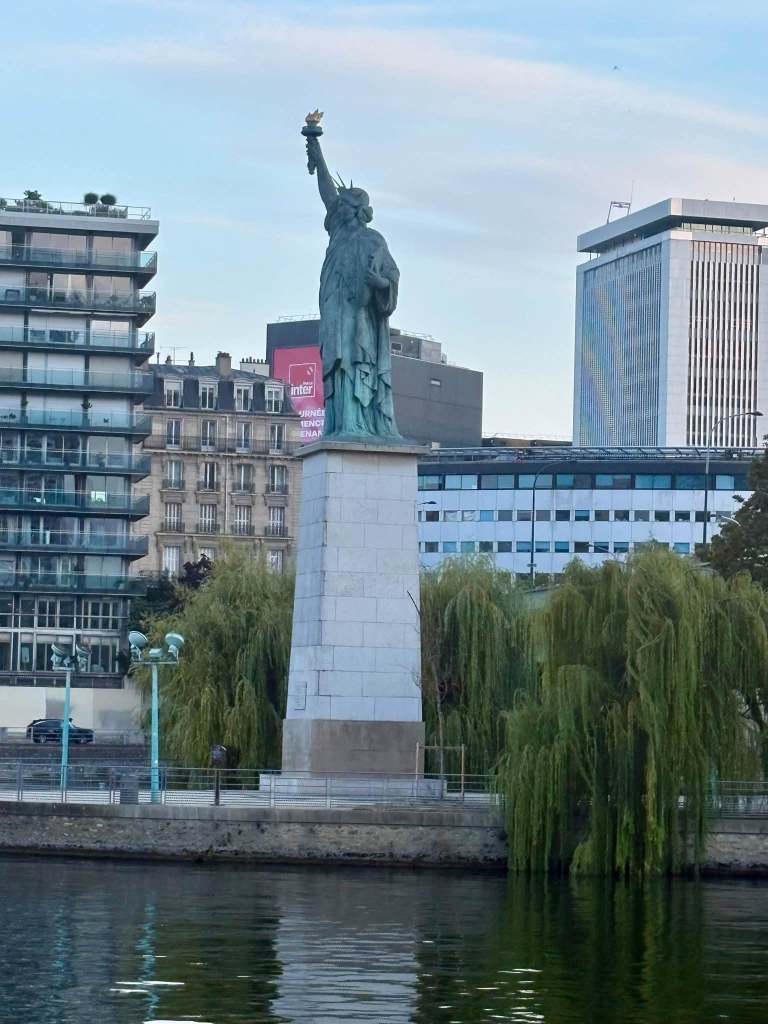
Statue of Liberty in Paris
“Give me your tired, your poor, Your huddled masses yearning to breathe free, The wretched refuse of your teeming shore. Send these, the homeless, tempest-tost to me, I lift my lamp beside the golden door!”
Words engraved on the plaque inside the pedestal of the Statue of Liberty in New York. Emma Lazarus’s 1883 poem “The New Colossus” remains the defining statement on Liberty’s welcoming spirit.
Was intentional on my walk this morning and Paris did not disappoint.
This is the quarter-scale replica of the Statue of Liberty (Liberté éclairant le monde) located on the Île aux Cygnes at the southern tip near the Pont de Grenelle (in the 15th arrondissement).
Unlike the NYC original, the tablet held in Lady Liberty’s left hand displays two historical dates carved in Roman numerals:
* July 4, 1776: American Declaration of Independence.
* July 14, 1789: Storming of the Bastille / French Revolution.
This inscription links the two democratic revolutions and highlights the alliance between France and the United States. Here a few lesser known facts.
1. While the full-sized NYC statue was a gift from the people of France to the U.S., this bronze replica was given to Paris in 1889 by the Committee of Americans in Paris (an expatriate community) to commemorate the centennial of the French Revolution.
2. When the statue was inaugurated on July 4, 1889, President Sadi Carnot turned it to face east toward the Élysée Palace and the Eiffel Tower to avoid having the President’s back to the statue during the official ceremony. Sculptor Frédéric-Auguste Bartholdi was disappointed, as he had always intended for it to face west toward New York. It remained facing east for nearly 50 years until 1937, when it was rotated to face west down the Seine toward its sister statue across the Atlantic for the 1937 Exposition Universelle.
3. The statue on Île aux Cygnes has stayed in place since 1889, with one major exception: in 1998–1999, it was temporarily removed from its pedestal and shipped to Odaiba, Tokyo, as part of the “Year of France in Japan” cultural celebration. It returned home to Paris after the exhibition, but a replica was permanently erected in Odaiba due to its immense local popularity.
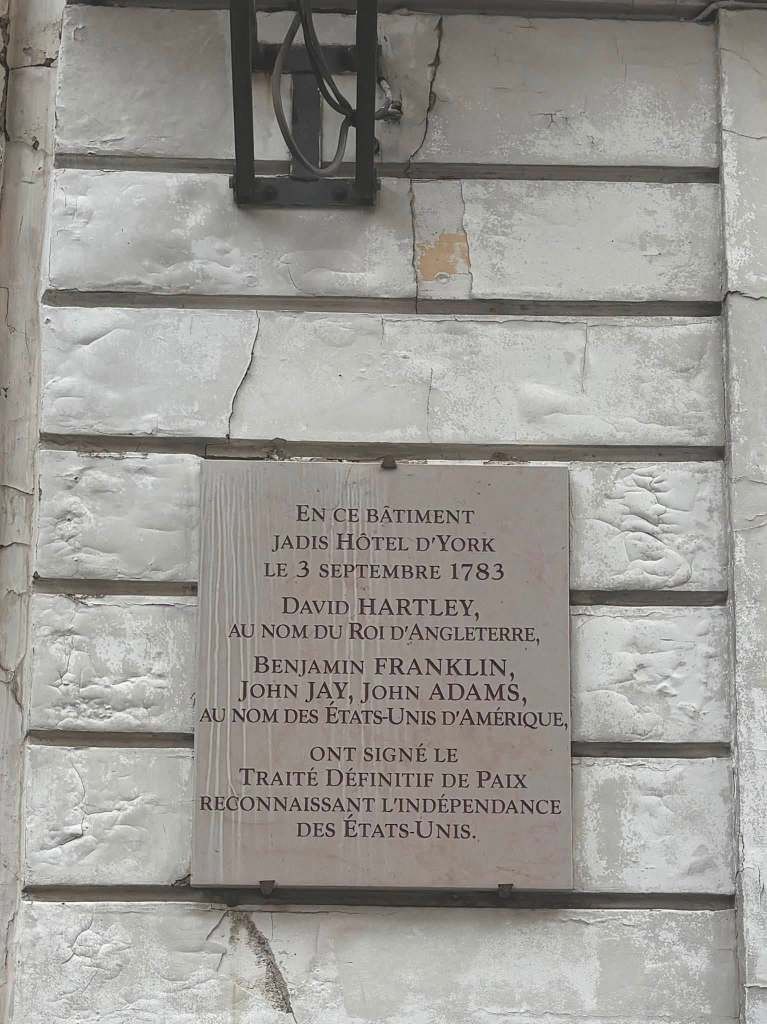
56 Rue Jacob (Former Hôtel d’York):
Hidden on a quiet street in the 6th arrondissement, a commemorative plaque marks the site where John Adams, Benjamin Franklin, John Jay, and British representative David Hartley signed the Treaty of Paris on September 3, 1783, officially ending the American Revolutionary War.
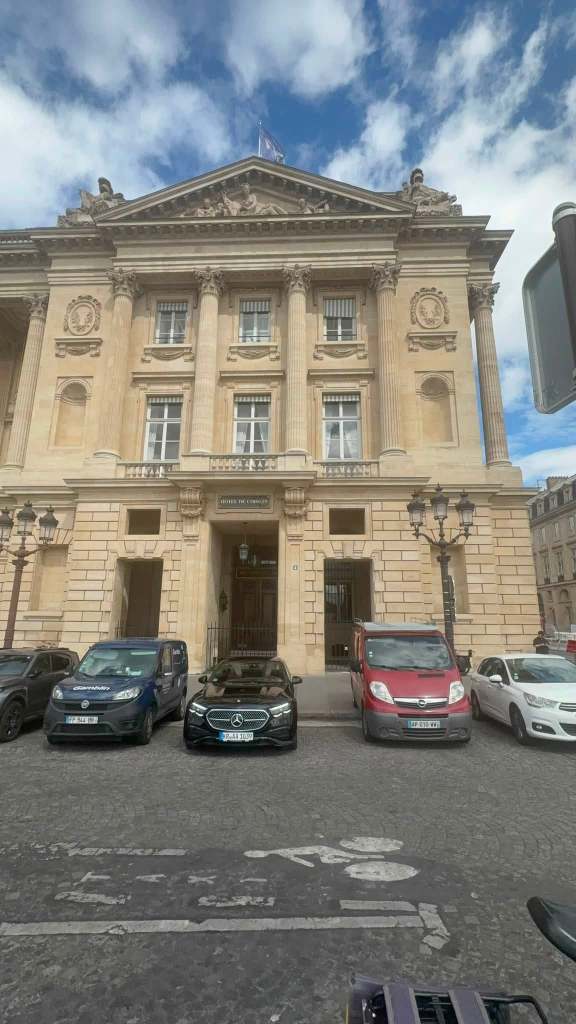
Hôtel de Coislin & Place de la Concorde:
Located at 1 Rue Royale, this 18th-century hôtel particulier is where France officially became the first nation to recognize the independence of the United States. On February 6, 1778, Benjamin Franklin and French diplomats signed the Treaty of Alliance and Treaty of Amity and Commerce here.
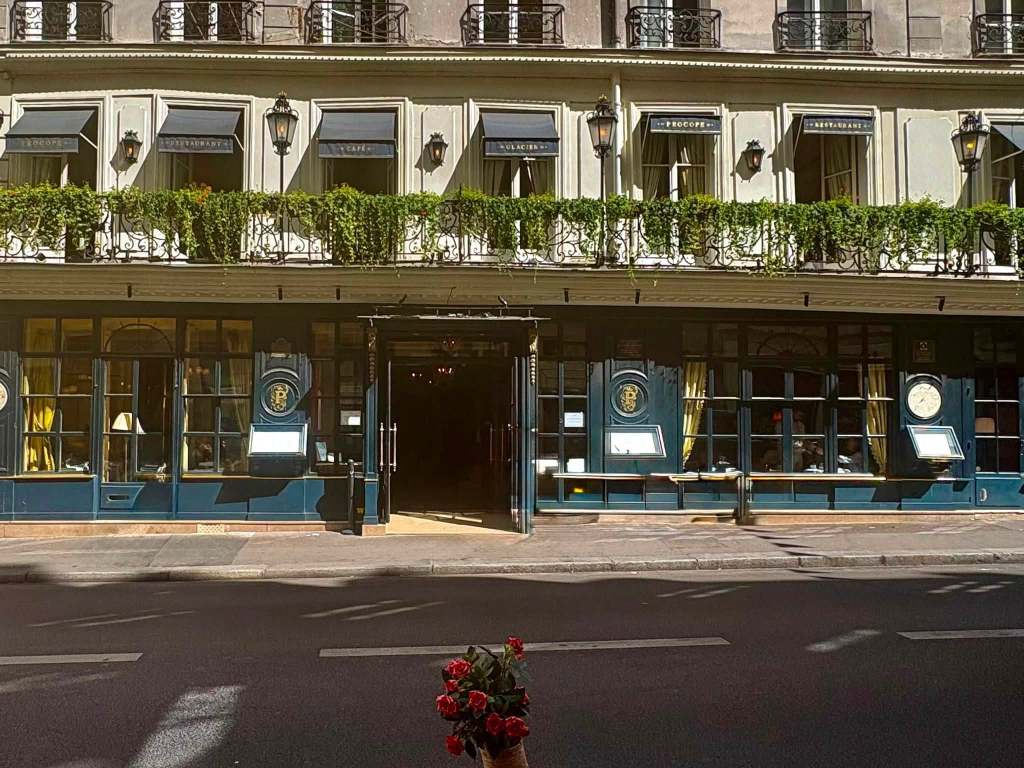
Café Procope:
Founded in 1686 in Saint-Germain-des-Prés, Paris’s oldest operating café served as an intellectual hub during the Enlightenment. Benjamin Franklin, Thomas Jefferson, and John Adams frequented Procope alongside French thinkers like Voltaire and Diderot to debate democratic principles and draft diplomatic documents.
Ate there with British friends and the food and ambience are still wonderful!

