PARIS STREET SIGNS
“The music is not in the notes, but in the silence between.” – Wolfgang Amadeus Mozart
This week’s history lesson is on Paris street signs.
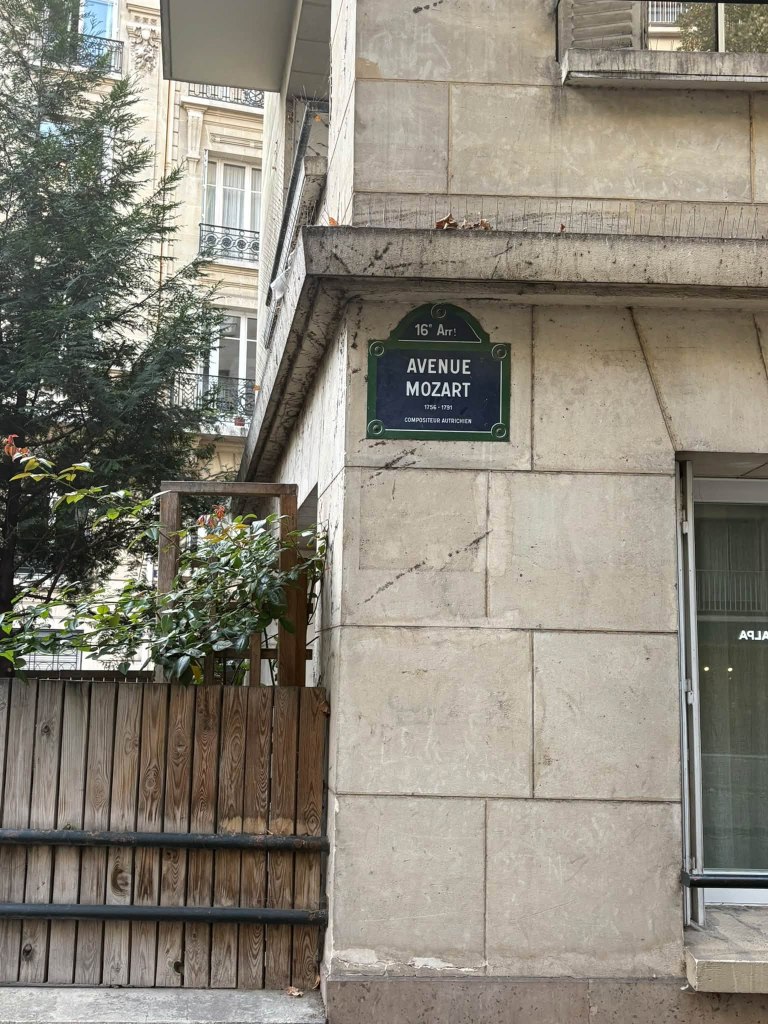
Paris street signs, like the plaque for Avenue Mozart in the attached photo, have a rich history and strict design rules.
* Strictly Regulated Design: The iconic look of white lettering on a dark blue background framed by a bronze or green border—was standardized in 1844. The dark enamel plaque format was chosen for maximum durability and visibility against the city’s limestone buildings.
* Neighborhood Anchors: Every sign displays the arrondissement number at the top (16 Arr! in the photo). This makes it easy to orient yourself anywhere in the city, as Paris’s 20 arrondissements spiral outward clockwise like a snail shell (escargot in attached Photo).
* Mini History Lessons: Below the street name, many signs include a brief subtitle explaining who or what the street is named after (e.g., 1756-1791 / COMPOSITEUR AUTRICHIEN…. Austrian Composer). This practice was introduced to help educate the public on historical, artistic, and scientific figures as they walked through the city.
* Property Owner Responsibility: Historically, when these uniform metal signs were introduced, property owners were legally required to allow the city to affix the plates directly onto the facade of their buildings.

